
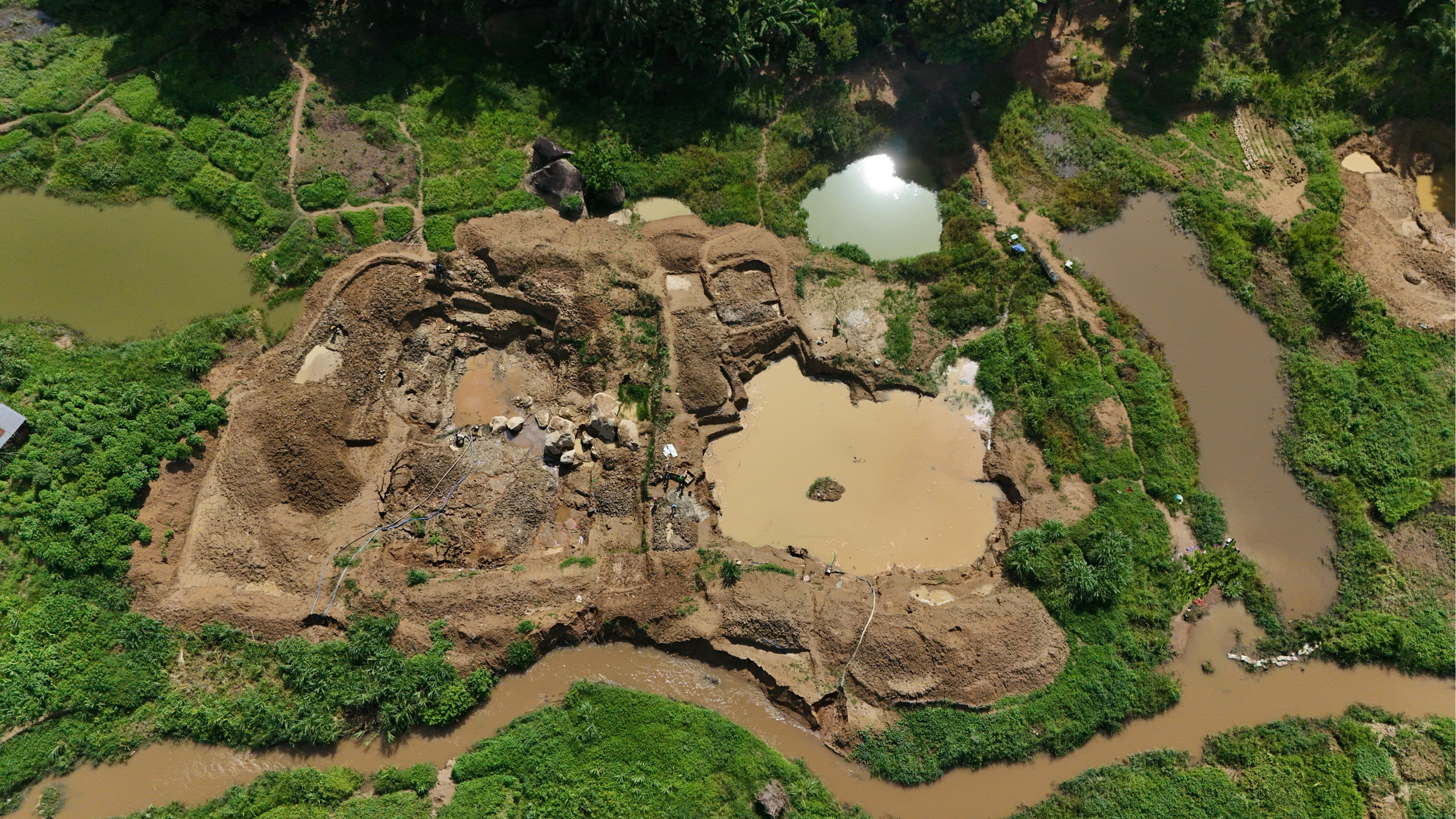
The Challenge
Over several decades, a select few microbes have been discovered that can release metals from mine waste (bioleach), detoxify contaminants, and neutralise acidic environments. These microbes have been employed in open and contained facilities up to industrial scales. However, their functional efficiencies vary and introducing foreign microbes into new environments can pose unexpected risks.
Mine sites are naturally home to millions of microbes, some of which are primed to efficiently perform these functions under local conditions, presenting opportunities to maximise metal recovery while minimising environmental impact from current and legacy mining activities. Until recently, discovering local microbes at scale has been cost-prohibitive.
The Solution
Using advanced DNA sequencing and computation via the mining microbiome analytics platform (M-MAP), we profiled hundreds of mine-site samples at an active Rio Tinto site to create a microbial inventory. We recovered genomes from over 1,600 native microbial strains, revealing their functional potential, including sulphur and iron oxidation or reduction, and copper immobilisation or transport. This data also provides important information on how to enhance the growth of selected microbial strains, including energy and nutritional sources as well as optimal ranges for temperature and acidity. By integrating DNA information with chemical information from the same source samples, we can identify microbial strains with key traits required for efficient biomining and bioremediation.
Key Benefits of Building a Microbial Inventory:
Broad Detection: Captures a wide range of microbial species already adapted to mine site conditions from minimal samples.
Early Warning Signals: Detects invasive or problematic species earlier than observational methods.
Functional Interventions: Identifies useful applications of native microbes based on DNA
Integration & Efficiency: DNA samples can be collected during routine water/soil monitoring and analyzed alongside chemical assays.
Cost-Effectiveness: Reduces need for multiple, species-specific surveys.
Koonkie’s Approach
In this case study, Koonkie tested tailings, waste rock, and water samples for local microbes that perform microbially induced calcite precipitation (MICP) to suppress dust particles by forming biocement, as well as species that have the potential to increase copper biomining efficiency.
Koonkie identified a tractable set of 33 strains, which can now be advanced to lab-scale technology development. This approach can be applied to discover strains with potential application in tailings stabilisation, acid mitigation, and contaminant removal. This work supports the development of innovative microbial solutions that enhance operational efficiencies and drive sustainability objectives across Rio Tinto’s mining operations.
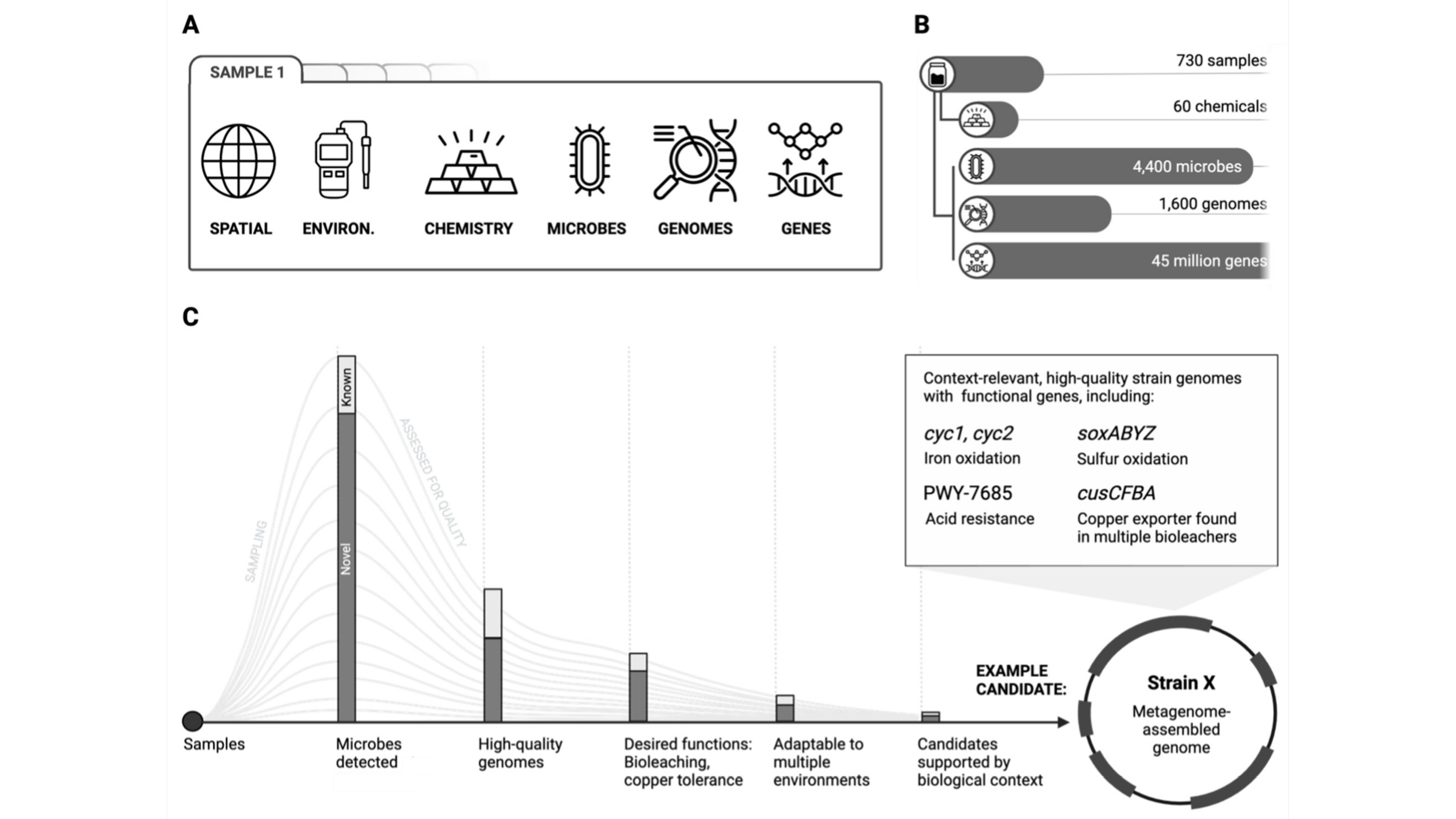
Figure 1: Schematic of the microbial inventory and the process to pinpoint useful microbes for biotechnological development. (A) This approach collects datatypes across domains to gain a full picture of the chemical activity and potential at mine sites. (B) In this project, these data types were integrated to generate large-scale data, from which discoveries can be made. (C) This microbial inventory can then be queried to identify candidates for biotechnology development and rich information to facilitate the growth of these candidates in the lab.
About Koonkie
Koonkie's team of biologists, bioinformaticians, and computer scientists have the highly-specific expertise required to create a sampling plan, identify the organisms present in these environments, and track changes in their composition over time. Koonkie uses DNA sequencing and custom build analytics pipelines to decode which and how many organisms are present in specific samples, and any changes to species abundance over time. Utilizing this data, Koonkie can provide strategies to encourage more rapid and lower risk reclamation of mine sites.
Reach out to services@koonkie.com to schedule a consultation today.
Interested in learning more? Request a free download of our Rio Tinto case study!
