

Five questions environmental managers should ask before starting a biodiversity survey
Traditional biodiversity surveys deliver vital baseline data, but observational constraints inevitably leave critical blind spots. Before commissioning your next monitoring campaign, ask these five questions.
Traditional biodiversity surveys deliver vital baseline data, but observational constraints inevitably leave critical blind spots. Before commissioning your next monitoring campaign, ask:
How much biodiversity escapes detection simply because organisms remain hidden?
Conventional field methods favor visible, abundant, or easily captured species. Rare, cryptic, or secretive organisms frequently evade physical detection entirely.
How heavily does our data depend on perfect timing and weather?
Environmental variables, seasonal migrations, and animal behavior directly dictate whether survey crews encounter target species. Failing to spot an organism during a narrow sampling window does not verify its absence.
Do operational logistics limit our reach to a fraction of the total ecosystem?
Deploying field teams, specialized equipment, and heavy sampling gear across challenging terrain consumes significant resources—often while logging data for only a small subset of local taxa.
Can we distinguish real ecological shifts from sampling variation?
When conventional species lists remain incomplete, variance between sampling events can obscure true environmental trends. Disentangling real habitat change from sampling error becomes exceptionally difficult.
Does our survey methodology impose unnecessary disturbance on the site?
Trapping, electrofishing, and intrusive handling stress local wildlife and demand complex logistics, limiting how frequently or widely crews can monitor sensitive environments.
The Strategy: Resolving Monitoring Gaps with Environmental DNA
Environmental DNA (eDNA) answers all five challenges by shifting the focus from narrow, targeted measurements to analyzing genetic material left in soil or water samples. By analyzing these traces, eDNA addresses each core monitoring vulnerability:
Capturing genetic signatures of rare or cryptic taxa without requiring physical sightings.
Detecting organism presence independent of brief behavioral windows or weather events.
Screening broad taxonomic groups from single environmental samples to streamline field effort.
Generating clear, reproducible biological baselines to isolate real ecological changes.
Minimizing physical impact by collecting sensitive biological data non-invasively without disturbing local populations.
Strengthening, Not Replacing, Traditional Methods.
The primary strength of eDNA lies in integration rather than replacement. Conventional field techniques provide demographic measurements, physical health indicators, and behavioral details that genetic sequences cannot offer. Pairing eDNA with traditional field surveys constructs a far more resilient dataset.
At Koonkie, we combine eDNA with environmental datasets such as soil geochemistry and remote sensing to address a crucial operational question:
Is the ecosystem changing in the direction we expect, and do we have enough evidence to know why?
About Koonkie
Koonkie is a biological data analytics and software company specializing in large-scale DNA and biodiversity data. We work with Tier-1 mining companies, environmental consultants, leading universities, NASA, and more to solve complex data challenges in natural and industrial systems. Our expertise spans the planning, processing, analysis, and interpretation of high-volume genomic datasets to deliver actionable insights for decision-making.
Reach out to services@koonkie.com or click below to schedule a consultation today.

Speeding Up Mine Closure with Integrated Environmental Intelligence
Backed by funding from the DIGITAL Supercluster and the Government of Canada, Koonkie is building a first-of-its-kind platform to integrate environmental DNA (eDNA) analytics, soil health data, and remote sensing with Indigenous ecological knowledge. For mine operators, this integrated approach delivers the potential for shortened timelines and reduced costs to reach site reclamation goals.
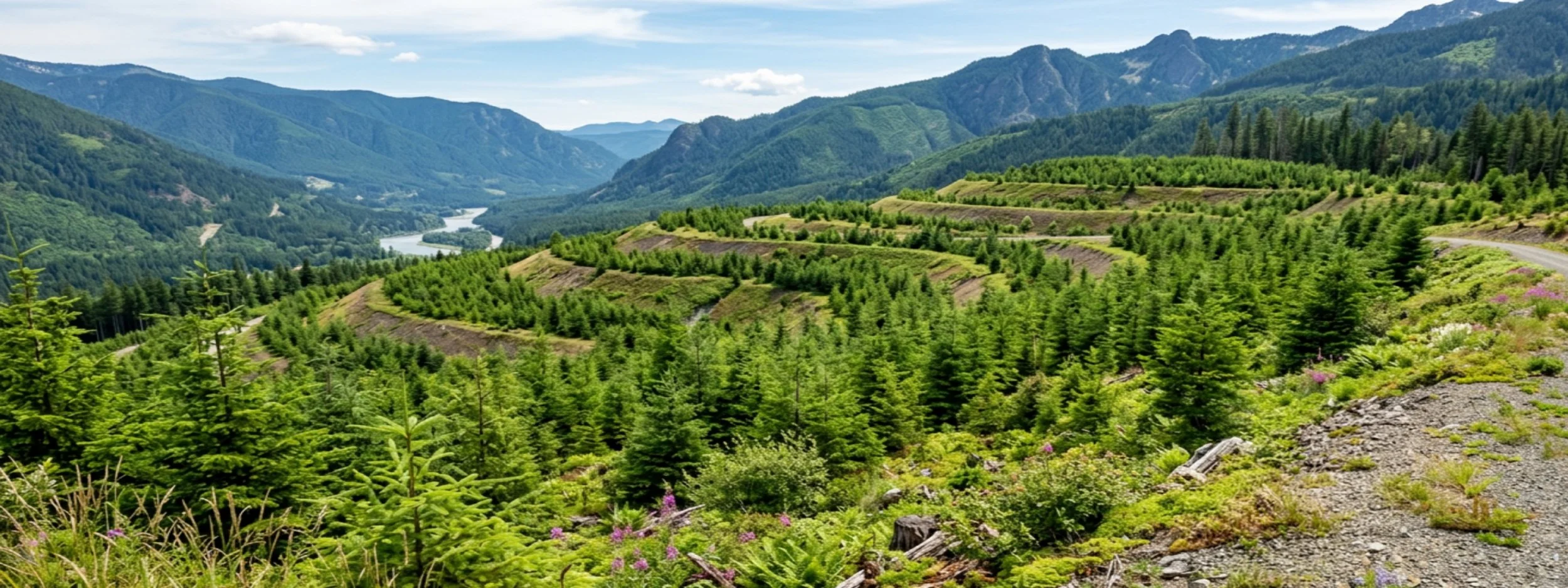
Koonkie leads consortium tackling siloed environmental data at mine sites
Restoring mine sites is one of the industry's most complex scientific and operational challenges. Ecological recovery unfolds over decades, and environmental knowledge is often locked in scientific silos, leaving operators without a single, actionable operational picture.
Current restoration baselining, monitoring, and forecasting approaches are limited by three primary factors:
High-value specificity, limited scope. Traditional technologies excel at detecting individual at-risk species, but overlook broader community shifts.
Siloed technologies. Current technologies are typically used in isolation or ad-hoc combinations, preventing truly integrated ecosystem assessments.
Fragmented workflows. Disparate datasets, such as manual surveys, remote sensing, and lab analyses require significant time and expertise to integrate, which delay insights and potentially masks early warning signs.
Just as modern mining operations rely on integrated planning models to run complex operations, successful land reclamation demands a single, connected view of the ecosystem. Soil chemistry, microbial activity, and vegetation must be analyzed together, not in isolation. No single platform connects macroscopic landscape changes with microscopic soil health, leaving the industry without the comprehensive, ecosystem-wide data required for true environmental accountability.
To bridge this gap, Koonkie is proud to lead a world-class Canadian consortium, including Miraterra Technologies, Regeneration, and Genome British Columbia, to launch the Multi-lens Ecological Restoration Monitoring and Forecasting project. Our platform will bridge this dataset gap by uniting data across scales, from macro-level satellite imagery to microscopic soil genomics. This integration transforms fragmented metrics into a cohesive source of truth, allowing operators to track progress, verify milestones, and optimize ecological recovery from the ground up.

Minister of Industry Mélanie Joly announces DIGITAL’s 2.9M commitment to this project in Sudbury ON on July 9, 2026. Photo taken by Ben Leeson /The Sudbury Star
Backed by funding from the DIGITAL Supercluster and the Government of Canada, Koonkie is building a first-of-its-kind platform to integrate environmental DNA (eDNA) analytics, soil health data, and remote sensing with Indigenous ecological knowledge. This platform is designed by the industry, for the industry. Advisory Board members from five major and junior mining companies have committed their support to ensuring the technology directly addresses real-world operational, regulatory, and ESG challenges. Rather than developing technology in isolation, we are building practical, interoperable tools, shaped by those responsible for delivering mine closure.
For mine operators, this integrated scientific approach delivers the potential for clear operational and environmental benefits:
Reduce restoration costs by up to 40% compared to legacy monitoring methods.
Shorten reclamation timelines by up to 5-10 years, significantly reducing the duration and cost of long-term environmental liabilities.
Enable precision interventions by using site-specific biological data to target exactly where land-use interventions will have the highest impact.

At Koonkie, we are proud to be a trusted scientific partner for the mining sector, from multinational majors to junior miners. By bridging the gap between advanced biology, digital technology, and operational reality, we are delivering the practical tools the industry needs to make mine reclamation predictable, efficient, and cost-effective.
About Koonkie
Koonkie is a biological data analytics and software company specializing in large-scale DNA and biodiversity data. We work with Tier-1 mining companies, environmental consultants, leading universities, NASA, and more to solve complex data challenges in natural and industrial systems. Our expertise spans the planning, processing, analysis, and interpretation of high-volume genomic datasets to deliver actionable insights for decision-making.
Reach out to services@koonkie.com or click below to schedule a consultation today.

Mine Site Microbes for Remediation and Metal Recovery
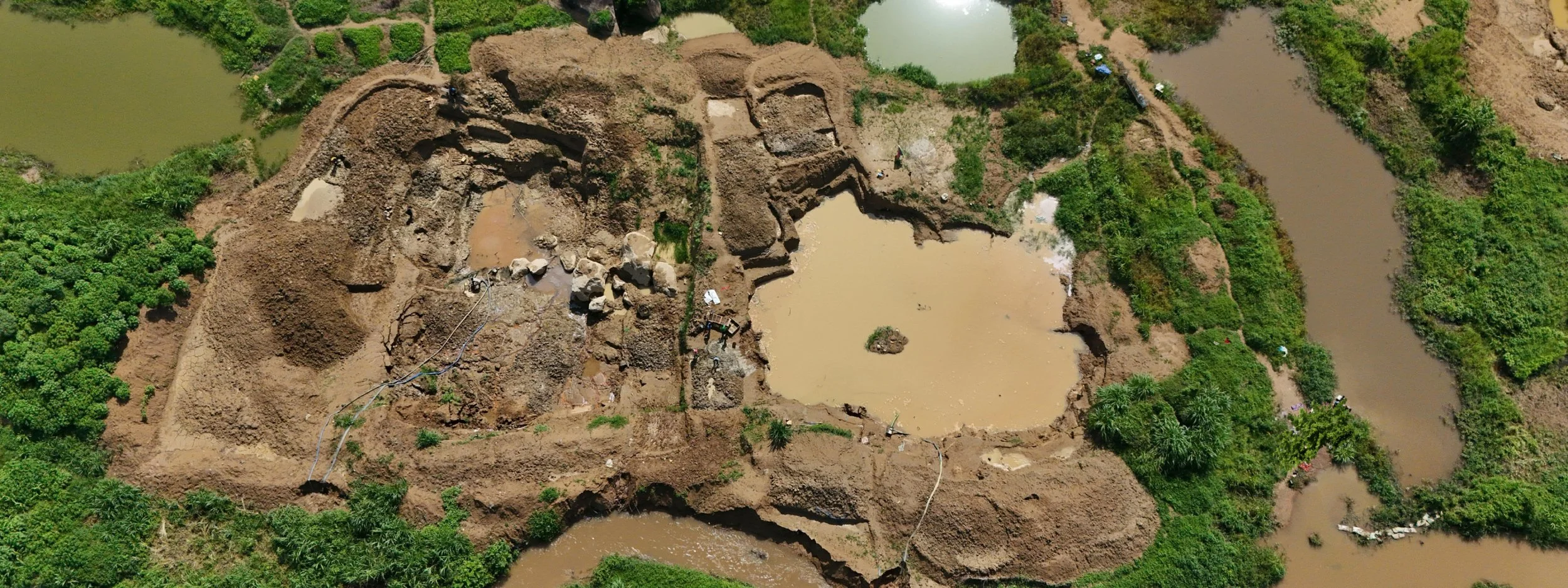
Mine sites are naturally home to millions of microbes, some of which are primed to efficiently perform specific functions such as leaching copper, or suppressing dust under local conditions. Koonkie profiled hundreds of mine site samples at a Rio Tinto copper mine, and found 33 microbial candidates that exhibited promise for further biotechnological development in biomining and dust suppression. Read the case study here.
The Challenge
Over several decades, a select few microbes have been discovered that can release metals from mine waste (bioleach), detoxify contaminants, and neutralise acidic environments. These microbes have been employed in open and contained facilities up to industrial scales. However, their functional efficiencies vary and introducing foreign microbes into new environments can pose unexpected risks.
Mine sites are naturally home to millions of microbes, some of which are primed to efficiently perform these functions under local conditions, presenting opportunities to maximise metal recovery while minimising environmental impact from current and legacy mining activities. Until recently, discovering local microbes at scale has been cost-prohibitive.
The Solution
Using advanced DNA sequencing and computation via the mining microbiome analytics platform (M-MAP), we profiled hundreds of mine-site samples at an active Rio Tinto site to create a microbial inventory. We recovered genomes from over 1,600 native microbial strains, revealing their functional potential, including sulphur and iron oxidation or reduction, and copper immobilisation or transport. This data also provides important information on how to enhance the growth of selected microbial strains, including energy and nutritional sources as well as optimal ranges for temperature and acidity. By integrating DNA information with chemical information from the same source samples, we can identify microbial strains with key traits required for efficient biomining and bioremediation.
Key Benefits of Building a Microbial Inventory:
Broad Detection: Captures a wide range of microbial species already adapted to mine site conditions from minimal samples.
Early Warning Signals: Detects invasive or problematic species earlier than observational methods.
Functional Interventions: Identifies useful applications of native microbes based on DNA
Integration & Efficiency: DNA samples can be collected during routine water/soil monitoring and analyzed alongside chemical assays.
Cost-Effectiveness: Reduces need for multiple, species-specific surveys.
Koonkie’s Approach
In this case study, Koonkie tested tailings, waste rock, and water samples for local microbes that perform microbially induced calcite precipitation (MICP) to suppress dust particles by forming biocement, as well as species that have the potential to increase copper biomining efficiency.
Koonkie identified a tractable set of 33 strains, which can now be advanced to lab-scale technology development. This approach can be applied to discover strains with potential application in tailings stabilisation, acid mitigation, and contaminant removal. This work supports the development of innovative microbial solutions that enhance operational efficiencies and drive sustainability objectives across Rio Tinto’s mining operations.
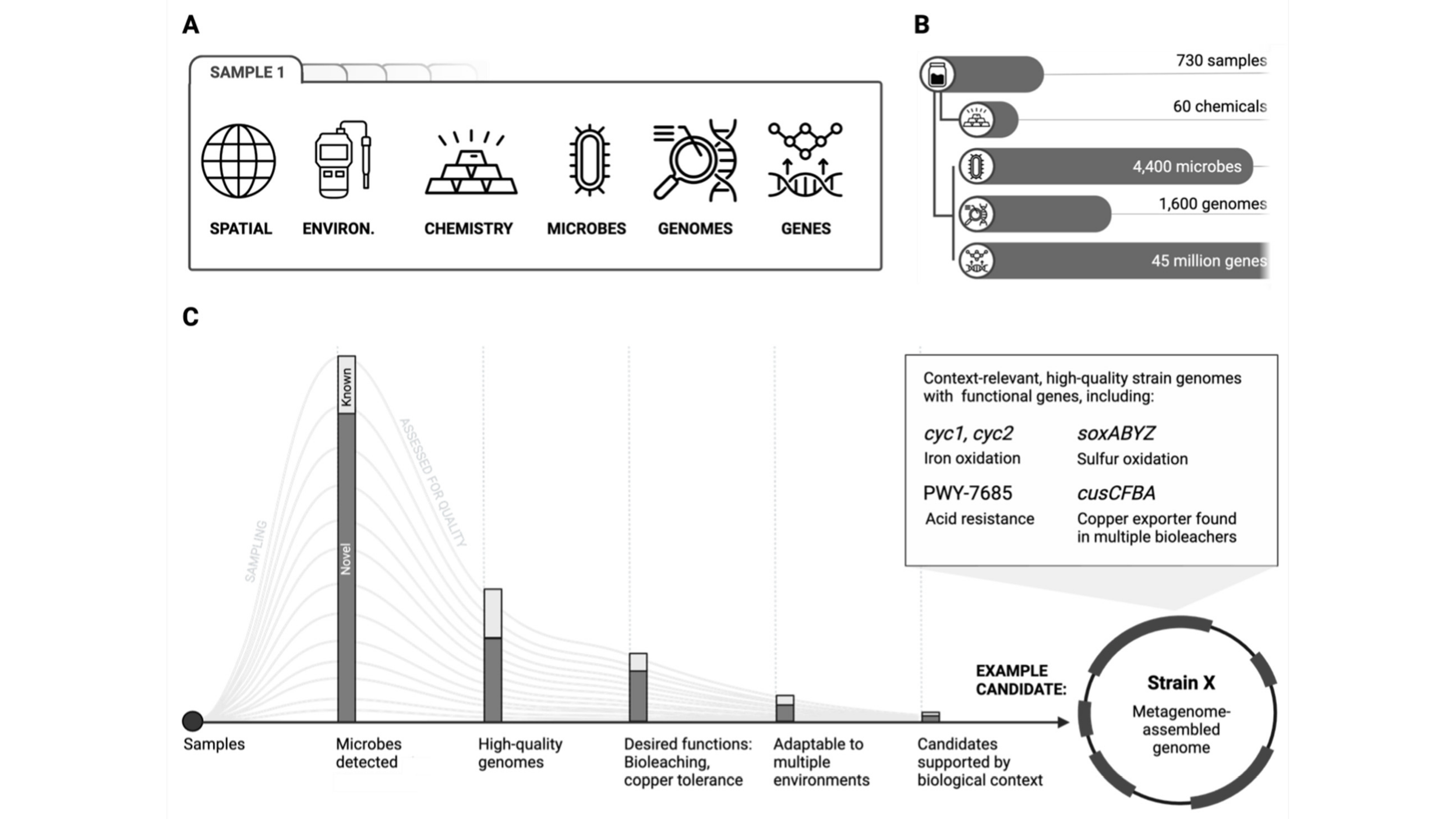
Figure 1: Schematic of the microbial inventory and the process to pinpoint useful microbes for biotechnological development. (A) This approach collects datatypes across domains to gain a full picture of the chemical activity and potential at mine sites. (B) In this project, these data types were integrated to generate large-scale data, from which discoveries can be made. (C) This microbial inventory can then be queried to identify candidates for biotechnology development and rich information to facilitate the growth of these candidates in the lab.
About Koonkie
Koonkie's team of biologists, bioinformaticians, and computer scientists have the highly-specific expertise required to create a sampling plan, identify the organisms present in these environments, and track changes in their composition over time. Koonkie uses DNA sequencing and custom build analytics pipelines to decode which and how many organisms are present in specific samples, and any changes to species abundance over time. Utilizing this data, Koonkie can provide strategies to encourage more rapid and lower risk reclamation of mine sites.
Reach out to services@koonkie.com to schedule a consultation today.
Interested in learning more? Request a free download of our Rio Tinto case study!

Environmental DNA (eDNA) for Biodiversity Assessments at Mine Sites
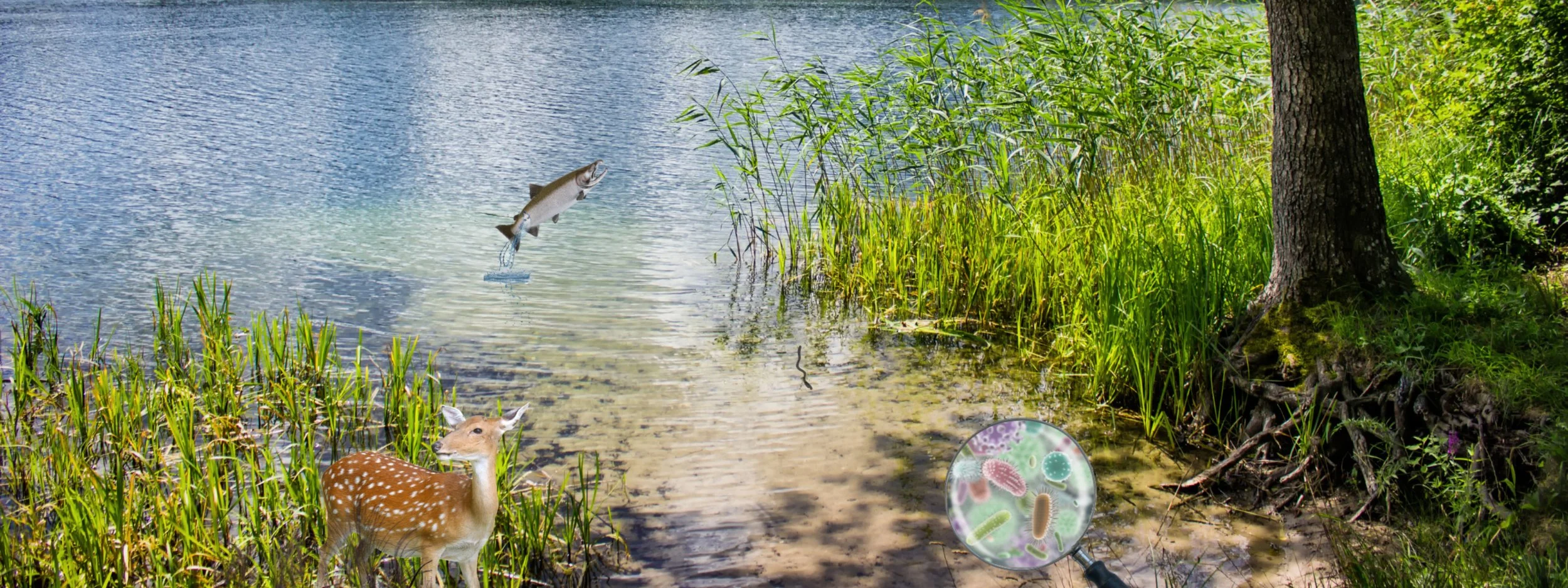
Environmental DNA (eDNA) is transforming biodiversity monitoring by detecting genetic material shed into the environment by plants, wildlife, fish, insects, and microbes. Collected from water, soil, or air, testing DNA can provide a snapshot of nearly all living species in the ecosystem.
The Challenge
Traditional biodiversity tests such as quadrats, pitfall traps, aerial imagery, and electro-fishing are limited to specific taxa. They often capture only lagging indicators, favoring easily observed or robust species. This fragmented approach can lead to blind spots and additional costs in ecological health assessments.
Additionally, these methods typically extrapolate broader ecosystem success from the recovery of select species, assuming other life forms (like supporting flora or less-visible fauna) are following suit. This introduces a source of risk at reclamation sites, especially when ecosystem recovery hinges on complex interdependencies.
The Solution
Environmental DNA (eDNA) is transforming biodiversity monitoring by detecting genetic material shed into the environment by plants, wildlife, fish, insects, and microbes. Collected from water, soil, or air, testing DNA can provide a snapshot of nearly all living species in the ecosystem.
Key Benefits of eDNA for environmental monitoring:
Broad Biodiversity Detection: Captures a wide range of species from a single sample.
Early Warning Signals: Detects invasive species or loss of native species earlier than observational methods.
Integration & Efficiency: eDNA samples can be collected during routine water/soil monitoring and analyzed alongside chemical assays.
Cost-Effectiveness: Reduces need for multiple, species-specific surveys.
eDNA doesn’t require visual sightings or physical capture, making it ideal for detecting elusive or transient species. And with sequencing costs dropping exponentially over the last decade, implementing this test at scale is now more accessible than ever.
Koonkie’s Approach
Koonkie partners with mining groups to integrate eDNA monitoring seamlessly into their existing reclamation protocols. Our approach:
Enables early detection of biodiversity loss or invasive species.
Offers better-informed, real-time adjustments to reclamation efforts.
Simplifies sampling with high-throughput lab processing.
Provides quantitative, reproducible data on the presence and abundance of organisms.
In practice, eDNA captures early signals to determine if the land is on track to return to a healthy state by showing which species are returning and thriving, and which are not. Seasonal sampling builds a dynamic, time-resolved picture of ecosystem recovery.

Figure 1: The three primary categories of biodiversity monitoring, and the types of studies that overlap between each category. eDNA captures data from all domains.
About Koonkie
Koonkie's team of biologists, bioinformaticians, and computer scientists have the highly-specific expertise required to create a sampling plan, identify the organisms present in these environments, and track changes in their composition over time. Koonkie uses DNA sequencing and custom build analytics pipelines to decode which and how many organisms are present in specific samples, and any changes to species abundance over time. Utilizing this data, Koonkie can provide strategies to encourage more rapid and lower risk reclamation of mine sites.
Reach out to services@koonkie.com to schedule a consultation today.
Interested in learning more? Request a free download of our eDNA brochure!

Microbes in Mining: Bioleaching and Beyond
Bioming (or bioleaching) is an established, eco-friendly approach to metal extraction that uses naturally occurring microbes. Instead of relying on energy-intensive smelting or harsh chemicals, biomining harnesses the power of bacteria to break down rock and release metals like copper, gold, nickel, and rare earth elements.
The Challenge
New, large ore deposits are getting harder to find and access, meaning lower quality sites must be utilized. Decreasing ore quality means higher costs and emissions per tonne. There are technological bottlenecks, meaning we are reaching the limits of existing physical and chemical processes.
In addition to environmental and technological limitations, government policies and social license are shifting towards more sustainable practices.
The Solution

Figure 1: Mechanism of action for bioleaching bacteria A. ferrooxidans.
Biomining (or bioleaching) is an established, eco-friendly approach to metal extraction that uses naturally occurring microbes. Instead of relying on energy-intensive smelting or harsh chemicals, biomining harnesses the power of bacteria to break down rock and release metals like copper, gold, nickel, and rare earth elements.
~20% of the world’s copper is already being extracted with microbes such as A. ferrooxidans, a species of bacteria that has the ability to convert copper in ore into a more accessible water-soluble format.
Koonkie’s Approach
Koonkie designs and implements sampling strategies for identifying native bioleaching candidates through rapid and low-cost DNA barcoding, providing an inventory of site-resident bioleachers. However, organisms within the same species are not identical: different strains of the same bacteria can have significantly different nutrient sources and outputs.
Since microbes are too small to be seen by eye, it can be helpful to think in terms of dogs. From DNA barcoding, we can see that a dog (canis lupus) is present in an area. But without more detailed data identifying what specific breed (strain) they are, it would be impossible to tell if it is a chihuahua or husky. To get this additional level of actionable insights for bacteria and other microbes, a more in-depth analysis must be performed.
If you want to feed the dog to keep it healthy, it is impossible to know how much and what kind of food it needs if you don’t know which specific dog is in the area. For dogs and bioleachers, Whole Genome Sequencing (WGS) of samples can provide this deeper level of insight. Koonkie can interpret this data to identify and encourage the growth of the most efficient local bioleachers to increase yield and quality of extracted metals such as copper.
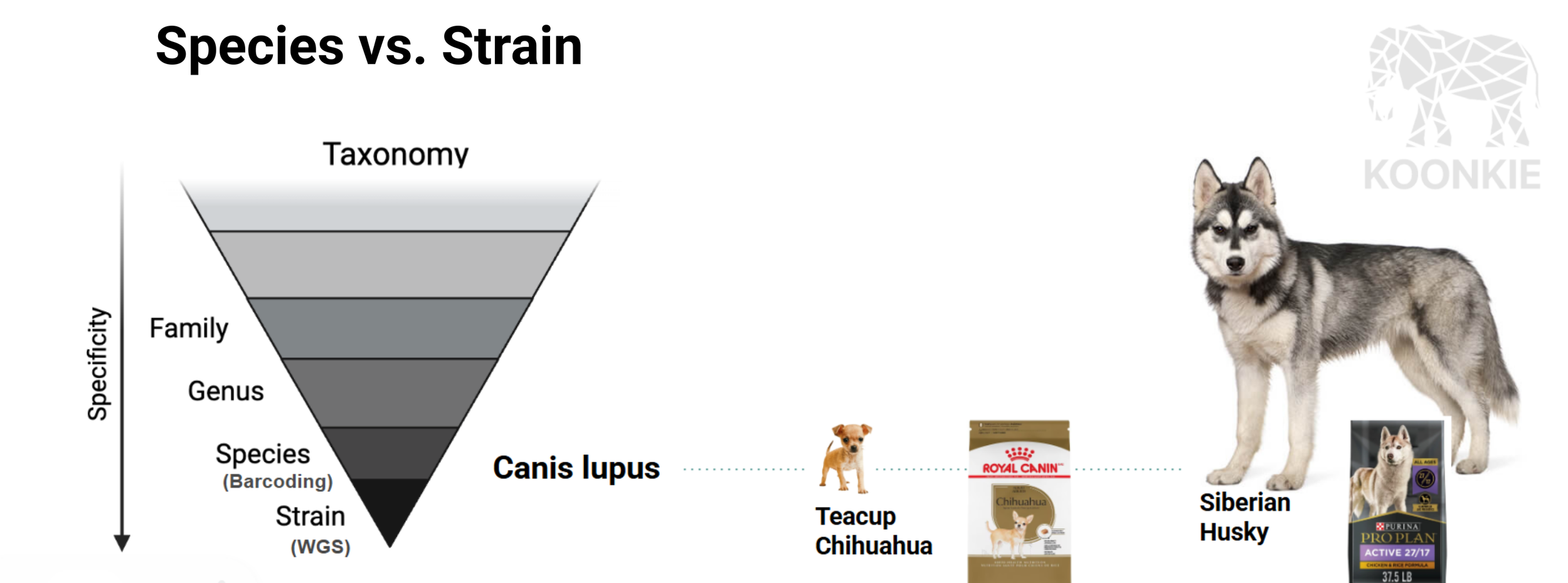
Figure 2: Depiction of the level of insight that can be gained using DNA barcoding alone, along with the differences that exist between organisms belonging to the same species.
About Koonkie
Koonkie's team of biologists, bioinformaticians, and computer scientists have the highly-specific expertise required to create a sampling plan, identify the microbes present in these communities, and track changes in their composition over time. Koonkie uses DNA sequencing to decode which and how many microbes are present in specific samples, and what they can do in the environment. Utilizing this data, Koonkie can provide strategies to encourage the growth of key microbes.
Reach out to services@koonkie.com to schedule a consultation today.
Interested in learning more? Request a free download of our Microbes in Mining brochure!

Gut Mycobiota: the CHILD Health Project
We developed a published, peer-reviewed predictive model to predict the development of allergies and asthma in children based on their gut fungi.

The Fungus Inside Us
Researchers had limited knowledge of the gut fungi, or mycobiota, and its influence on the developing immune system of young children. With our collaborators, we discovered dynamic changes in children’s mycobiota during their first year of life and offered a tool for predicting the likelihood of a child developing environmental allergies by their 5th birthday.
With advanced bioinformatics techniques and data collected from the stool samples of 343 infants from the CHILD (Canadian Healthy Infant Longitudinal Development) cohort, we discovered the identities of these little-known fungal communities. We assessed the relationships between fungal community composition and environmental factors like where infants live, their diets, and seasons of birth. Potential links between infant gut mycobiota and the development of allergies in childhood were also investigated. Using a set of early-life environmental factors in combination with fungal community composition at 1 year of age, we developed a predictive model for the tendency to develop diseases such as allergies and asthma.
This work highlights the important role of infant gut mycobiota in immune system development, and shows the promise of modifying gut mycobiota as a viable therapeutic intervention when faced with early risk factors for asthma and environmental allergies.
Read more here: https://journals.asm.org/doi/full/10.1128/mbio.03396-20