

Stabilizing Tailings with Microbes
Biocement made by microbes can solidify and stabilize tailings—an environmentally friendly, cost effective, and durable solution to a major mining challenge.
The Challenge
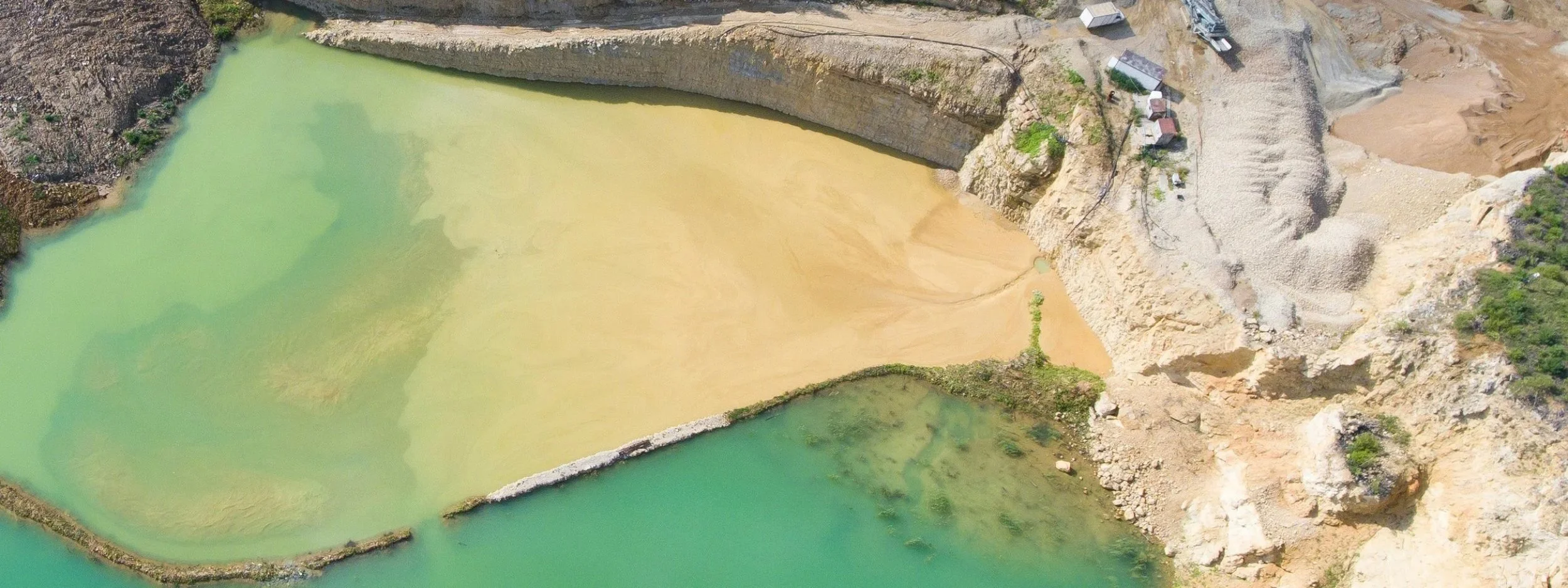
Tailings, a common byproduct of mining, often contain toxic material that can pose significant environmental and health risks. These facilities can produce hazardous dust spread by wind, causing health problems for surrounding communities and the environment. Tailings ponds almost always require extensive engineering to ensure they are stable to keep the mine site and nearby communities safe from dam failures.
Current mitigation strategies include adding water and chemicals to the tailings at active mine sites, and using covers, re-vegetation, or other long-term active-control measures at legacy sites. These methods are time intensive, costly, require significant amounts of water, and have limited effectiveness.
More effective and efficient solutions are needed to stabilize tailings to reduce detrimental impacts on ecosystems and nearby communities.
The Solution

Certain microbes have the ability to solidify the materials found in tailings, producing a natural cement. This process, called biocementation, is an environmentally friendly, cost effective, and more durable solution to stabilize tailings than current methods.
Putting microbes with biocementation capabilities to work is an emerging strategy for controlling fugitive dust from tailings. Even better, microbes with these capabilities are often already present in tailings. Biocementation has been shown to strengthen and stabilize soil, sand, and concrete. Further, heavy metals co-precipitate with the cemented soil, reducing their toxicity to surrounding environments.
Identifying and cultivating the native microbes with biocementation capabilities can serve as a more effective and environmentally friendly solution for tailings storage.
Koonkie’s Approach
Koonkie's team of biologists, bioinformaticians, and computer scientists have the highly-specific expertise required to identify these rare microbes with biocementation capabilities. Koonkie uses DNA sequencing to decode which microbes are present in samples and sorts through huge amounts of data to find the organisms with relevant metabolic pathways for stabilization. This method can serve as a more efficient, effective, and environmentally friendly method for tailings stabilization.
Want to learn more? Reach out to services@koonkie.com to schedule a consultation.
Reference:
1. Anbu et al. SpringerPlus (2016)
2. Achal et al. Ecological Engineering (2011)
Download the PDF version of this case study here.

Environmental Monitoring with Microbes
Microbes are cost-effective and sensitive indicators of mining impacts and recovery, allowing companies to intervene early and meet regulations.

The Challenge
Mining of metals is critical for the global adoption of greener technologies like electric vehicles and wind turbines. But extraction of these resources may affect the surrounding soil, water, air, and biodiversity.
Mining companies must balance the unprecedented demand for materials with their own sustainability goals and government regulations to mitigate environmental impacts.
Current tools and methods used to monitor environmental impacts of mining processes often fail to provide timely, sensitive, and actionable data. Delays in intervention can not only harm the environment, but can increase remediation costs for companies.
The Solution

Compared to other bioindicators like animals and plants, microbes are early, accessible, and sensitive sensors of environmental changes (1). Using microbes for environmental assessment of mining practices can replace or bolster existing methods.
Using microbes as a monitoring tool allows companies to intervene early, ultimately improving sustainability efforts, saving costs, and ensuring that regulatory requirements are met.
Koonkie’s Approach
At Koonkie, we leverage the power of microbial communities as sensitive and timely indicators of environmental impacts of mining activities. For example, by sampling the microbial communities in water, soil, and sediment around mine sites over time, we’ve assessed how standard operating procedures affect the surrounding environment. Using data from the microbial communities, we’ve assessed the long-term impacts of these mining practices and provided compelling evidence to support the continuation or suspension of the procedure at mine sites.
Koonkie's team of biologists, bioinformaticians, and computer scientists have the highly-specific expertise required to create a sampling plan, identify the microbes present in these communities, and track changes in their composition over time. Koonkie uses DNA sequencing to decode which and how many microbes are present in specific samples, and what they can do in the environment. This timely and sensitive method can improve the effectiveness of monitoring environmental impacts overall, and align with the needs of regulatory bodies.
Want to learn more? Reach out to services@koonkie.com to schedule a consultation.
Reference:
1. Ma et al (2022). Int J Environ Res Public Health.
Download the PDF version of this case study here.

Finding Rare Microbes to Remediate Waste
Native microbes with unique capabilities can be used to remediate mining wastes, bypassing the need for expensive and harsh processes.

The Challenge
The mining industry is necessary for extracting natural resources that are critical to maintaining societal functions. But it often leaves behind environmentally harmful byproducts like tailings, acid rock drainage, and slurry. These waste materials may be loaded with toxic levels of metals or other pollutants that can contaminate soil, water, and air, negatively affecting the ecosystem and human health.
Traditional methods of dealing with mining byproducts often involve physical processes or chemical treatments, which can be expensive, resource-intensive, limited in their scope and effectiveness, and may themselves produce byproducts that are harmful to the environment.
There is a clear and urgent need for novel solutions that can effectively remediate the unwanted chemicals produced by mining in a sustainable and environmentally friendly manner.
The Solution

Native microbes with unique metabolic capabilities can be used to remediate harmful mining byproducts. The majority of microbes have not yet been discovered. Identifying these specific microbes and harnessing their metabolic potential by implementing targeted growth strategies can serve as an effective and ecologically friendly bioremediation strategy.
Microbes have the natural ability to process and neutralize pollutants. The harshness of many mining environments can act as a unique selection pressure on the microbial community. These microbes, found in the very environments affected by mining activities, have evolved to thrive in these harsh conditions by developing metabolic pathways that allow them to process and neutralize pollutants like heavy metals and chemicals. We can help you put them to work!
Koonkie’s Approach
Koonkie's team of biologists, bioinformaticians, and computer scientists have the highly-specific expertise required to identify these rare microbes with beneficial metabolic capabilities. Koonkie uses DNA sequencing to decode which microbes are present in samples and sorts through huge amounts of data to find the organisms with relevant metabolic pathways for remediation. This method can serve as a more efficient, effective, and environmentally friendly reclamation strategy.
Want to learn more? Reach out to services@koonkie.com to schedule a consultation.
Download the PDF version of this case study here.

Microbes Indicate Underground Minerals
Soil microbes can effectively indicate buried mineral resources, serving as an alternative to costly and time-consuming traditional prospecting methods.
The Challenge
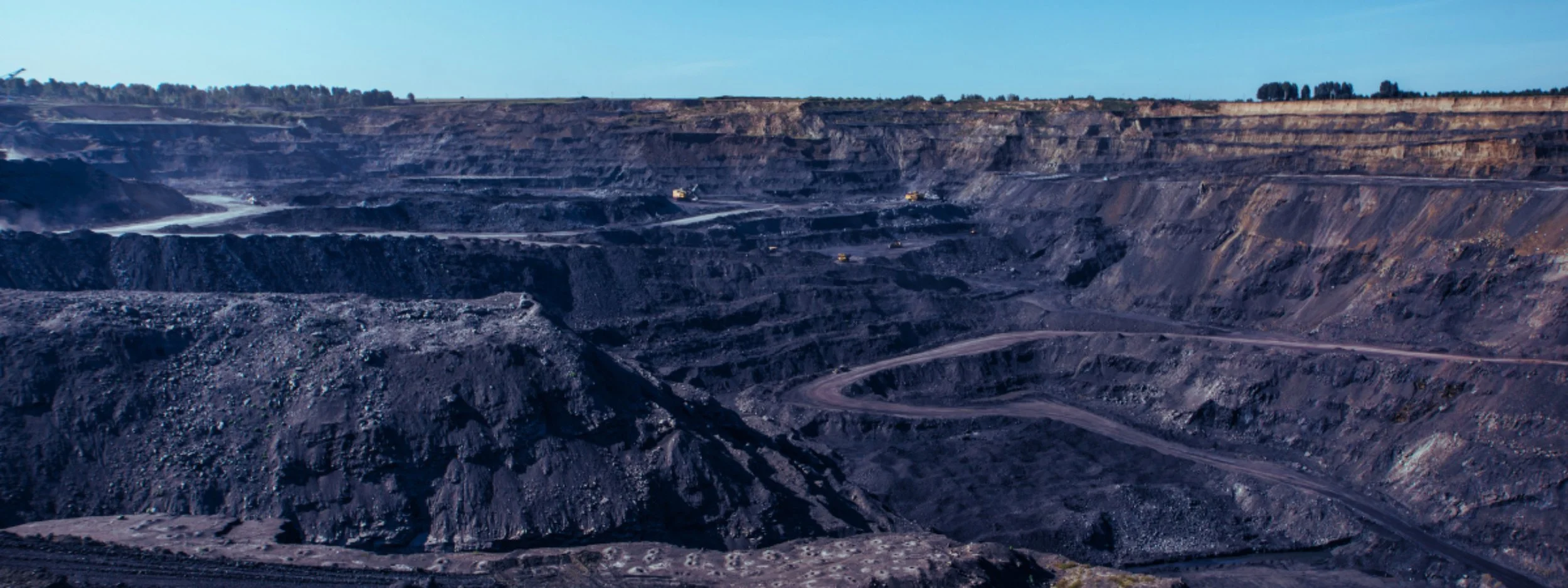
Extraction of natural resources, including rare earth metals, is critical to maintaining societal functions and transitioning to greener technologies like electric vehicles and wind turbines. Mineral deposits that can be detected at surface level are increasingly rare, resulting in increased expenditures on prospecting to search for resources below the earth’s surface.
Current prospecting practices are costly and time-consuming. They rely on a combination of geologic, geophysical, and geochemical tools that suggest general areas for exploration. Narrowing down the specific location of resources within these areas then typically requires expensive drilling machinery to take samples at depth across large grids.
Identifying new surface-level indicators of buried resources that narrow the search for mineralization at depth could increase the efficiency of expensive prospecting and exploration efforts.
The Solution

Recent discoveries have found that microbes in surface soils can indicate buried resources tens of meters underground. Identifying microbial indicators could substantially narrow the search space to increase efficiency in mineral prospecting.
Microbes in soil have huge potential as highly-sensitive indicators of their environments. Because of their unique metabolisms, certain highly specialized microbes thrive best in the presence of specific nutrients, environmental conditions, or presence of metals. Thousands of years of evolution can now be transformed into bioprospecting.
Koonkie’s Approach
Koonkie's team of biologists, bioinformaticians, and computer scientists have the highly-specific expertise required to find these indicators. Koonkie uses DNA sequencing to decode which microbes are present in specific soils and sorts through huge amounts of data to find the rare organisms that thrive above buried resources. This low-cost method can increase the efficiency of traditional prospecting techniques and the process of extracting minerals at large.
Want to learn more? Reach out to services@koonkie.com to schedule a consultation.
Reference: Siminster et al. Communications Earth and Environment (2023)
Download the PDF version of this case study here.

The Mining Microbiome Analytics Platform (M-MAP)
Supported by Canada’s Digital Technology Supercluster, this platform is accelerating microbial solutions to some of mining’s biggest challenges.

Industry-Sized Questions, Microscopic Answers
The global adoption of greener technologies like electric vehicles and wind turbines requires the extraction of raw minerals at rates that exceed what traditional mining practices can deliver. Backed by Canada’s Technology Supercluster, this consortium-led project is revolutionizing the mining industry by looking for solutions to mining’s biggest challenges in their tiniest miners – the resident microbial community.
We worked with our consortium partners (including mining giants Teck Resources and Rio Tinto) to develop the Mining Microbiome Analytics Platform (M-MAP), an online platform that is accelerating the development of eagerly-awaited microbial solutions for mining. With this platform, our team is extracting key information about microbial communities from mining-related environments to understand “who” is there and “what” they are doing. These insights empower mining companies to embrace next-generation biomining technologies, and to deploy custom data-backed solutions.
Microbiome analytics is catalyzing the development of state-of-the-art environmental practices across the mining lifecycle: a “green” approach to resource extraction and mine site remediation that aims to significantly reduce, and ultimately eliminate, the use of toxic chemicals, develop more efficient mining practices, and reduce adverse environmental impacts. M-MAP represents the largest investment in planned natural resource genomic bioinformatics in the history of the sector.
Learn more here: https://www.m-map.ca/